
Herb-Marinated Roasted Chicken with Vegetables
Posted on February 1, 2023
1 Comments
Share this recipe


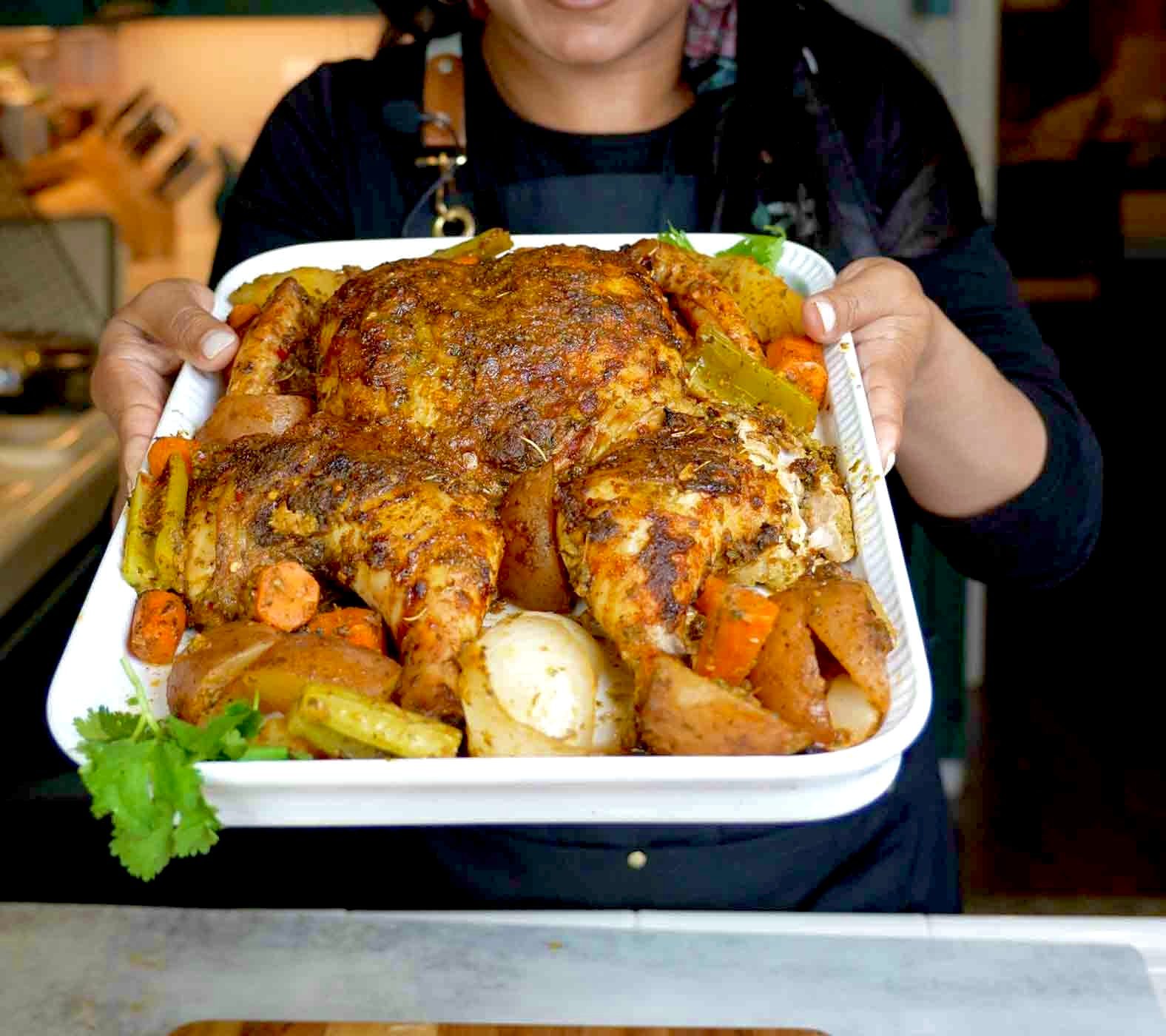
This Herb-Marinated Roasted Chicken with Vegetables is the ultimate Sunday dinner that fills your house with the most incredible aromas! A whole chicken gets spatchcocked (butterflied) for even cooking, then marinated in a vibrant green herb marinade that's packed with fresh parsley, cilantro, green onions, thyme, garlic, serrano peppers, and warm spices like smoked paprika, chili powder, and cumin. The marinade is blended until smooth and massaged all over the chicken, including under the skin where you'll also tuck pats of butter that melt and baste the meat from the inside as it roasts. After marinating for at least 4 hours or overnight (the longer the better for maximum flavor penetration), the chicken roasts on a wire rack over a bed of red potatoes, carrots, onions, celery, and garlic that soak up all the delicious drippings and marinade while they cook. The vegetables get tossed in some of that same herb marinade and chicken broth, so they're incredibly flavorful and tender. The chicken roasts covered first at a lower temperature to cook through gently and stay juicy, then you crank up the heat, uncover it, and let the skin get golden, crispy, and caramelized while you brush it with the pan juices and melted butter every 20-30 minutes. The result is a chicken with perfectly crispy, flavorful skin, meat that's so tender and juicy it falls off the bone, and vegetables that are caramelized, buttery, and have soaked up all those incredible herb and chicken flavors. This is the kind of meal that brings everyone to the table, makes your house smell amazing, and creates those perfect Sunday dinner memories. Serve it family-style straight from the roasting pan with crusty bread to soak up all the delicious pan juices!
Frequently Asked Questions

Q: What does spatchcocking mean and why should I do it?
A: Spatchcocking (also called butterflying) means removing the backbone of the chicken and flattening it out so it lays flat in the roasting pan. This technique is a game-changer because it allows the chicken to cook much more evenly, the dark meat and white meat finish at the same time instead of the breasts overcooking while waiting for the thighs to be done, it reduces cooking time by about 30-40%, and it creates more surface area for that crispy, golden skin. To spatchcock: Place the chicken breast-side down. Using kitchen shears or a sharp knife, cut along both sides of the backbone and remove it completely. Flip the chicken over and press down firmly on the breastbone to flatten it. If you're not comfortable doing this yourself, ask your butcher to spatchcock it for you, most will do it for free!
Q: Can I marinate the chicken for longer than overnight?
A: Yes, but there's a limit! The chicken can marinate for up to 24 hours for maximum flavor, and that's actually ideal. The acids in the marinade (vinegar and lemon juice) help tenderize the meat and the herbs penetrate deeply. However, don't marinate for longer than 24 hours because the acids can start to break down the meat too much and make the texture mushy rather than tender. If you only have 4 hours, that still works and will give you good flavor, but overnight (8-12 hours) to 24 hours is the sweet spot. Make sure to massage the marinade really well and create those holes in the chicken so it penetrates deeply, not just coats the surface.
Q: Why do you cook it covered first, then uncovered?
A: This two-stage cooking method is the secret to juicy meat with crispy skin! Cooking covered at a lower temperature (365°F) for the first hour traps moisture and steam, which keeps the chicken incredibly juicy and helps it cook through gently without drying out. It's like creating a little mini-oven environment that braises the chicken slightly. Then, you increase the temperature to 385°F and uncover it for the last 30-45 minutes, which allows the skin to dry out, crisp up, and turn golden brown and delicious. If you roasted it uncovered the whole time at high heat, the skin would be crispy but the meat might dry out. This method gives you the best of both worlds, juicy, tender meat AND crispy, flavorful skin! idunt mauris.
Q: How do I know when the chicken is done and safe to eat?
A: Always use an instant-read meat thermometer to check for doneness, never rely on cooking time alone since oven temperatures vary! Insert the thermometer into the thickest part of the thigh (not touching bone) and the thickest part of the breast. The chicken is safe to eat when both areas reach an internal temperature of 165°F. The juices should run clear, not pink, when you pierce the meat. If you don't have a thermometer, you can check by piercing the thigh with a knife, the juices should run clear and the meat should no longer be pink near the bone. However, a thermometer is the most reliable way to ensure food safety. Let the chicken rest for 10 minutes after removing from the oven before carving, this allows the juices to redistribute and keeps the meat even juicier!
This Herb-Marinated Roasted Chicken with Vegetables is the ultimate comfort dinner! A spatchcocked whole chicken gets marinated in a vibrant blend of fresh herbs, garlic, serrano peppers, and warm spices, then roasted over potatoes, carrots, and vegetables that soak up all the delicious drippings. Butter tucked under the skin keeps everything incredibly juicy while the outside gets golden and crispy. It's the perfect Sunday dinner that makes your house smell amazing!
Rate This Recipe!

Preparations
Prep Time:
30 minutes
Marinating Time:
4 hours to overnight (minimum 4 hours)
Cook Time:
1 hour 45 minutes
Total Time:
6 hours 15 minutes (including minimum marinating time)
Cuisine:
Latin-inspired, American
Course:
Main Course, Dinner
Calories:
450 kcal (approx. per serving)
Servings:
4-6
Author:
Ronica Rupan
Ingredients
Ingredients
For the Herb Marinade:
- 1 red onion, roughly chopped
- 8 garlic cloves, peeled
- 1 cup fresh parsley, chopped
- 1 cup fresh cilantro, chopped
- 6 pieces green onion, roughly chopped
- 15 sprigs fresh thyme, stems removed (about 2 tablespoons fresh thyme leaves)
- 1-2 serrano chili peppers (adjust to heat preference)
- 4 tablespoons olive oil
- 3 tablespoons white vinegar or apple cider vinegar
- 2½ teaspoons kosher salt
- ½ teaspoon black pepper
- 1 teaspoon red chili flakes
- 2 teaspoons chili powder
- 1½ tablespoons smoked paprika
- 1 teaspoon garlic powder
- 1 teaspoon onion powder
- 1 teaspoon dried parsley
- 1 teaspoon dried thyme
- Juice of ½ lemon (about 1-2 tablespoons)
- 1 teaspoon all-purpose seasoning
For the Chicken:
- 1 whole chicken (about 4-5 pounds)
- 1 lemon, for washing
- 6 tablespoons unsalted butter, softened and divided
- Additional salt, black pepper, garlic powder, and paprika for seasoning
For the Vegetables:
- 5 red potatoes, cut into chunks
- 4 medium carrots, peeled and cut into chunks
- 1 yellow onion, cut into wedges
- 4 celery stalks, cut into chunks
- 4 whole garlic cloves, peeled
- ½ cup chicken broth
Instructions
1. Make the Herb Marinade
Add all the marinade ingredients to a blender or food processor: red onion, garlic cloves, fresh parsley, cilantro, green onions, fresh thyme leaves, serrano peppers, olive oil, vinegar, salt, black pepper, chili flakes, chili powder, smoked paprika, garlic powder, onion powder, dried parsley, dried thyme, lemon juice, and all-purpose seasoning. Blend on high speed until completely smooth and vibrant green, about 1-2 minutes. Scrape down the sides as needed. Taste and adjust seasoning if needed. Transfer the marinade to a bowl and reserve about ⅓ cup (about 5-6 tablespoons) in a separate container for the vegetables later. Set aside.
2. Spatchcock the Chicken
Place the whole chicken breast-side down on a cutting board. Using sharp kitchen shears or a heavy knife, cut along both sides of the backbone, starting from the tail end and cutting all the way up to the neck. Remove and discard the backbone (or save it for making stock). Flip the chicken over so it's breast-side up. Press down firmly on the breastbone with both hands to flatten the chicken completely. It should lay flat like a butterfly. This allows for even cooking and more surface area for that crispy skin!
3. Clean the Chicken
Fill a large bowl or your sink with cold water. Add the juice of 1 lemon and a splash of vinegar. Place the spatchcocked chicken in the lemon-vinegar water and rinse it thoroughly inside and out. This helps remove any impurities and gives the chicken a fresh, clean flavor. Drain the chicken well and pat it completely dry with paper towels, both inside and out. The drier the skin, the crispier it will get when roasting.
4. Prepare the Chicken for Marinating
Using a sharp knife or fork, poke holes all over the chicken, creating small slits in the meat (not just the skin). Go deep enough to penetrate the meat but don't go crazy. These holes allow the marinade to penetrate deeply into the chicken rather than just coating the surface. Make holes in the breasts, thighs, drumsticks, and anywhere there's thick meat.
5. Marinate the Chicken
Place the spatchcocked chicken in a large roasting pan, large baking dish, or extra-large zip-top bag. Pour the herb marinade all over the chicken, reserving that ⅓ cup you set aside earlier for the vegetables. Use your hands to massage the marinade into every part of the chicken, making sure it gets into all those holes you created, under the wings, and coating every surface. Really work it in there! Cover the pan tightly with plastic wrap or seal the bag. Refrigerate for at least 4 hours, but overnight (8-12 hours) or up to 24 hours is even better for maximum flavor.
6. Preheat the Oven
When you're ready to cook, preheat your oven to 365°F (185°C). Position a rack in the middle of the oven.
7. Prepare the Vegetables
Cut the red potatoes into large chunks (about 2-inch pieces). Peel and cut the carrots into 2-inch chunks. Cut the onion into thick wedges. Cut the celery into 2-inch pieces. Peel the garlic cloves and leave them whole. Place all the vegetables in a large roasting pan. Add the reserved herb marinade you set aside earlier and toss the vegetables to coat them completely. Spread them out in an even layer on the bottom of the roasting pan.
8. Set Up the Chicken
Place a wire rack over the vegetables in the roasting pan. If you don't have a wire rack that fits, you can place the chicken directly on top of the vegetables, but a rack allows better air circulation. Remove the marinated chicken from the refrigerator. Carefully loosen the skin from the breast meat by sliding your fingers underneath, being careful not to tear the skin. Take 3-4 tablespoons of the softened butter and spread it under the skin, directly on the breast meat. This keeps the breast meat incredibly moist and bastes it from the inside. Place the chicken on the wire rack over the vegetables, breast-side up and spread out flat.
9. Season and Add Butter
Lightly season the top of the chicken with a sprinkle of salt, black pepper, garlic powder, and smoked paprika. Don't go too heavy since the marinade is already seasoned. Place the remaining 2-3 tablespoons of butter in small dabs on top of the vegetables around the pan. Pour the ½ cup of chicken broth over the vegetables (not on the chicken). This creates steam and keeps everything moist while adding flavor to the vegetables.
10. Roast Covered
Cover the entire roasting pan tightly with aluminum foil, making sure it's sealed well to trap the moisture. Place in the preheated 365°F oven and roast covered for 1 hour. During this time, the chicken will cook through gently while staying incredibly juicy.
11. Increase Temperature and Uncover
After 1 hour, increase the oven temperature to 385°F (195°C). Carefully remove the roasting pan from the oven and remove the foil (watch out for the hot steam!). The chicken should already be mostly cooked and the vegetables should be tender. Return the uncovered pan to the oven.
12. Roast Uncovered and Baste
Roast uncovered for 30-45 minutes, basting the chicken every 20-30 minutes. To baste: Use a spoon or baster to scoop up the pan juices, melted butter, and any marinade from the bottom of the pan, and drizzle it all over the chicken. Be gentle so you don't brush off the marinade coating on the skin, just add more liquid on top. This keeps everything moist and helps the skin turn golden and crispy. The chicken is done when the skin is deep golden brown and crispy, and the internal temperature reaches 165°F.
13. Check Internal Temperature
After 30-45 minutes of uncovered roasting (1 hour 30 minutes to 1 hour 45 minutes total cooking time), check the internal temperature. Insert an instant-read thermometer into the thickest part of the thigh (not touching bone) and into the thickest part of the breast. Both should read 165°F. If not, continue roasting in 5-10 minute increments, checking the temperature each time, until it reaches 165°F. Food safety is crucial!
14. Rest the Chicken
Once the chicken reaches 165°F, remove the roasting pan from the oven. Tent the chicken loosely with foil and let it rest for 10 minutes before carving. This resting time allows the juices to redistribute throughout the meat, making every bite juicier. Don't skip this step!
15. Serve
Transfer the chicken to a cutting board and carve it into pieces, or serve it whole family-style. Arrange the roasted vegetables on a serving platter and place the carved chicken on top or alongside. Spoon some of the pan juices over everything. Serve immediately with crusty bread to soak up all those incredible juices!
More Recipes


Connect with Us on Social Media:



Hey! It’s Ronica!
This is where I love to share my passion for cooking, baking, and flavor. When I’m not creating delicious recipes, you’ll find me spending time with my family, working on my spice blends at Flora & Mana, or enjoying a homemade baked goods. Join me on this culinary journey to taste, healthy meals and fun kitchen hacks!
Read MoreWe'd Love to Hear from you!
Drop a Comment Below!
Leave a Reply
Get recipes first!
Subscribe now to get exclusive recipes, kitchen tips, and cooking inspiration delivered straight to your inbox.
Comments (1)
Tomica Williams
Great recipes